

Why Coffee Smells Better Than It Tastes: The Science Behind Coffee Aroma
You know that moment when someone starts brewing coffee, and suddenly the entire room feels a little more inviting?
The rich, warm aroma fills the air. You catch hints of chocolate, toasted nuts, caramel, or something wonderfully comforting. Before you've even taken a sip, your brain is already convinced that something delicious is coming.
Then you taste it. Sometimes, the flavor is everything you hoped for. Other times, it's surprisingly bitter, acidic, or simply not as magical as the smell suggested.
So, why does coffee smell better than it tastes? The answer lies in the relationship between your sense of smell, taste buds, brain, and the compounds released during coffee roasting and brewing.
Understanding this connection can change how you experience your daily cup. More importantly, it can help you brew coffee that tastes closer to the aroma you love.

The Science Behind Why Coffee Smells So Good
Coffee is one of the most aromatically complex beverages we enjoy every day.
During roasting, coffee beans undergo chemical reactions that create hundreds of volatile compounds responsible for the aromas we associate with freshly brewed coffee.
These compounds contribute to familiar scent notes such as chocolate, caramel, nuts, fruit, flowers, and roasted grains.
But here's the interesting part: your nose and tongue experience coffee very differently.

Your Nose Detects More Than Your Tongue
Your tongue detects five basic tastes:
- Sweet
- Sour
- Bitter
- Salty
- Umami
Your sense of smell, however, can distinguish a far wider variety of odor patterns.
When you smell freshly brewed coffee, volatile aromatic molecules travel through your nose and activate olfactory receptors. Your brain interprets these signals as familiar scents, such as roasted hazelnuts, cocoa, or caramel.
When you drink coffee, your tongue also detects bitterness and acidity, which may change how enjoyable the overall experience feels.
The takeaway: Coffee smells complex because your nose detects aromatic compounds, while your tongue responds to a smaller set of basic tastes.
What Happens to Coffee Beans During Roasting?
Green coffee beans don't smell like the coffee most people recognize. Their signature aroma develops primarily during roasting, when heat triggers a series of chemical reactions.
One of the most important is the Maillard reaction, which occurs when amino compounds and reducing sugars react under heat. This reaction contributes to roasted aromas and flavor compounds. Other roasting processes, including sugar degradation and caramelization-related reactions, contribute additional characteristics.
Depending on the beans and roast profile, these processes can create aromas reminiscent of:
- Dark chocolate and cocoa
- Toasted almonds and roasted nuts
- Caramel and brown sugar
- Roasted grains
- Fruity or floral notes
Roasting also creates compounds that contribute bitterness. This is one reason coffee can smell sweet and comforting even when the actual beverage tastes noticeably bitter.
Why Coffee Aroma Can Create Strong Expectations
Coffee doesn't just stimulate your senses. It also connects with your memories.
The smell of freshly brewed coffee might remind you of slow Sunday mornings, your favorite café, conversations with friends, or quiet moments before work. Your brain associates familiar aromas with previous experiences and emotions.
As a result, the smell of coffee can create a powerful expectation of comfort and enjoyment before you taste anything. When the actual flavor doesn't match that expectation, the difference can feel surprisingly noticeable.
It's not necessarily that the coffee tastes bad. Sometimes, your nose simply made a very convincing first impression.
Coffee Aroma vs. Coffee Taste: What's the Difference?
Although we often use the words taste and flavor interchangeably, they aren't exactly the same.
Taste refers primarily to sensations detected by taste receptors. Flavor is a broader experience involving taste, smell, and other sensations in the mouth.
Understanding this distinction helps explain why coffee can smell incredible but taste unexpectedly bitter.
How Your Brain Experiences Coffee Flavor
When you take a sip of coffee, several sensory processes happen together. Your tongue detects basic tastes such as bitterness, sweetness, and acidity. At the same time, aromatic compounds released in your mouth travel toward your nasal cavity through the back of your throat.
This process is called retronasal olfaction. It allows you to perceive many of the aroma characteristics associated with coffee while drinking it.
That's why coffee can seem less flavorful when your nose is blocked. Your tongue can still detect bitterness and acidity, but many complex aromatic notes become harder to perceive.
Why Coffee Often Tastes More Bitter Than It Smells
Bitterness is a natural characteristic of coffee. Compounds such as caffeine and certain roasting-derived substances contribute to its bitter taste.
However, the intensity of bitterness depends on several factors, including:
- Coffee bean variety
- Roast level
- Grind size
- Brewing temperature
- Extraction time
- Coffee-to-water ratio
Over-extracted coffee, for example, can taste harsh or excessively bitter. Under-extracted coffee may taste sour, thin, or unbalanced.
Meanwhile, the aroma might still be pleasant because aromatic compounds and taste-active substances don't always develop or extract in the same proportions. Great coffee aroma doesn't automatically guarantee great coffee flavor.
Why Coffee Smells Sweet Without Containing Much Sugar
Have you ever smelled coffee and noticed hints of caramel, chocolate, or brown sugar?
Those aromas can create the impression of sweetness even when the brewed coffee contains little naturally occurring sugar. Certain aromatic compounds resemble scents we associate with sweet foods, and your brain connects those familiar aromas with sweetness.
But when you drink black coffee, your taste buds may detect bitterness rather than the sweetness you expected. This difference is especially noticeable in coffees with chocolatey, nutty, or caramel-like aroma profiles.
How to Make Coffee Taste as Good as It Smells
The good news? You don't have to settle for coffee that smells amazing but tastes disappointing.
With the right beans, brewing technique, and a few small adjustments, you can create a cup with better balance, clarity, and flavor.

Start With Fresh, Quality Coffee Beans
Coffee freshness plays an important role in aroma and flavor. After roasting, coffee gradually loses volatile aromatic compounds through exposure to oxygen and other environmental factors. Over time, the coffee may become less vibrant and develop stale characteristics.
For better results:
- Choose coffee from a reliable roaster.
- Check the roast date when available.
- Store coffee in an airtight container away from heat, moisture, and direct sunlight.
- Grind beans shortly before brewing whenever possible.
- Purchase quantities you can use while the coffee is still fresh.
Freshness alone doesn't guarantee a perfect cup, but it provides a better foundation for enjoyable brewing.
Choose a Roast Profile That Matches Your Taste
Different roast profiles emphasize different characteristics. Use this table as a starting point when choosing coffee for your preferred flavor.
| Roast Profile | Common Flavor Characteristics | Ideal For |
|---|---|---|
| Light roast | Brighter acidity, floral or fruity notes | Those who enjoy vibrant flavors |
| Medium roast | Balanced acidity, sweetness, and roasted notes | Everyday black coffee and versatile brewing |
| Dark roast | Pronounced roasted notes and fuller perceived bitterness | Those who enjoy bold coffee or milk-based drinks |
These are general tendencies. Origin, processing, and brewing method also influence the final flavor.
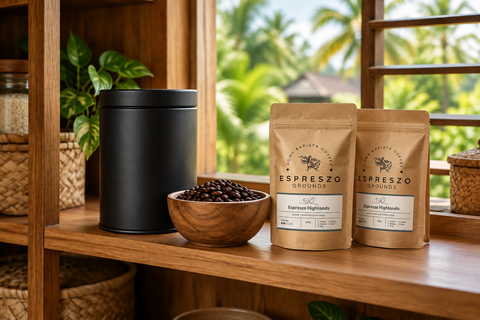
Espreszo pick: If you love coffee that smells chocolatey and tastes smooth, a balanced roast with cocoa or nutty notes may be worth exploring. Espreszo Highlands is presented with a smooth, balanced profile and cocoa notes, making it an appealing option for an everyday brew.
Get Your Coffee-to-Water Ratio Right
One of the easiest ways to improve coffee flavor is to measure your ingredients. Too much coffee relative to water can produce an overly concentrated cup. Too little coffee can make the beverage taste weak or watery.
Start with 1 gram of coffee for every 16 grams of water.
Coffee grounds 240 g
Water
This is a practical starting point for many filter brewing methods. Adjust the ratio based on your preferred strength and brewing method. A kitchen scale can help you make more consistent coffee without relying on guesswork.
Pay Attention to Water Temperature and Grind Size
Water temperature and grind size both affect extraction. For many manual filter brewing methods, a starting water temperature of approximately 90–96°C works well.
Grind size also matters:
- Too fine: May slow water flow and contribute to excessive extraction or bitterness.
- Too coarse: May produce insufficient extraction and a sour or weak cup.
- Proper grind: Helps achieve a balanced extraction suited to your brewing method.
Different brewing devices require different grind sizes, so it's worth adjusting your approach rather than following one universal setting. Read our guide to finding the right coffee grind for your brew.
Make Coffee Part of Your Daily Ritual
Sometimes, enjoying coffee isn't only about changing your brewing technique. It's also about giving yourself a moment to experience it.
Notice the aroma as the coffee brews. Take a sip after it has cooled slightly. Pay attention to the sweetness, acidity, body, and aftertaste.
Coffee's flavor can change as its temperature drops, revealing characteristics that may be harder to notice when the beverage is extremely hot.
At Espreszo, we believe good coffee deserves more than a rushed sip. Whether you're preparing your first cup before work or enjoying a quiet afternoon break, your coffee ritual should feel like something worth looking forward to.
Great coffee isn't just about how it smells. It's about enjoying the entire experience, from the first aroma to the final sip.
FAQs About Coffee Aroma and Taste
1. Why does coffee smell better than it tastes?
Coffee often smells better than it tastes because your nose detects a wide range of pleasant aromatic compounds, while your tongue also detects bitterness, acidity, and other basic tastes. Brewing conditions and personal preferences can make the difference between aroma and taste more noticeable.
2. Why does coffee smell sweet but taste bitter?
Coffee contains aromatic compounds that resemble the smells of caramel, chocolate, and toasted sugar. These scents can create an expectation of sweetness. However, brewed coffee also contains bitter compounds, and sweet-smelling aromas don't necessarily mean the beverage will taste sweet.
3. Why does freshly brewed coffee smell so good?
Freshly brewed coffee releases volatile aromatic compounds produced during roasting. Heat and water help release these compounds into the air, creating the familiar scent of coffee. Personal memories and positive associations can also make the aroma especially enjoyable.
4. Does freshly ground coffee taste better than pre-ground coffee?
Freshly ground coffee often retains more of its original aromatic characteristics because grinding increases the surface area exposed to oxygen, accelerating aroma loss. However, high-quality pre-ground coffee stored properly can still produce an enjoyable cup, particularly when used relatively soon after opening.
5. Why does my coffee taste bitter even when it smells amazing?
Excessive bitterness can result from the roast profile, brewing ratio, grind size, water temperature, or extraction time. Try adjusting one brewing variable at a time. For example, a slightly coarser grind or shorter extraction may improve the balance of a harsh-tasting cup.
6. Does the roast level affect coffee aroma and taste?
Yes. Roast level influences the chemical compounds responsible for coffee aroma and flavor. Lighter roasts often retain more origin-related fruity or floral characteristics, while darker roasts tend to emphasize roasted notes and bitterness. Medium roasts frequently offer a balance, although results vary by coffee.
7. Can the smell of coffee affect how we perceive its flavor?
Absolutely. Smell plays a major role in flavor perception through both orthonasal olfaction, when you sniff coffee, and retronasal olfaction, when aromatic compounds reach your nose while drinking. Without smell, many of coffee's complex flavor notes become harder to identify.
8. How can I make my coffee taste smoother and less bitter?
Start with fresh coffee, use an appropriate grind size, measure your coffee-to-water ratio, and avoid excessive extraction. You can also experiment with a different roast profile. A balanced coffee with cocoa or nutty notes may suit your preferences better than a strongly roasted, bitter blend.
Final Thoughts: Great Coffee Should Be Worth the First Sip

The reason coffee smells better than it tastes comes down to the fascinating way our senses work together.
Your nose detects complex aromatic compounds. Your tongue experiences basic tastes. Your brain combines these signals with memory, expectation, and emotion to create the coffee experience.
That's why the smell of freshly brewed coffee can feel so irresistible, even when the taste doesn't always live up to the anticipation.
But the right coffee beans and brewing techniques can make a meaningful difference. By understanding roast profiles, freshness, extraction, and flavor balance, you can create a cup that delivers more of what you love about coffee.
And when the aroma and flavor finally come together? That's a coffee ritual worth repeating.

Your Next Great Cup Starts Here
Discover Espreszo Highlands. Smooth, balanced coffee with cocoa notes, made for everyday moments that deserve a better brew.
Coffee is more than caffeine. It's your pause, your focus, your daily ritual.
SHOP ESPRESZO HIGHLANDS